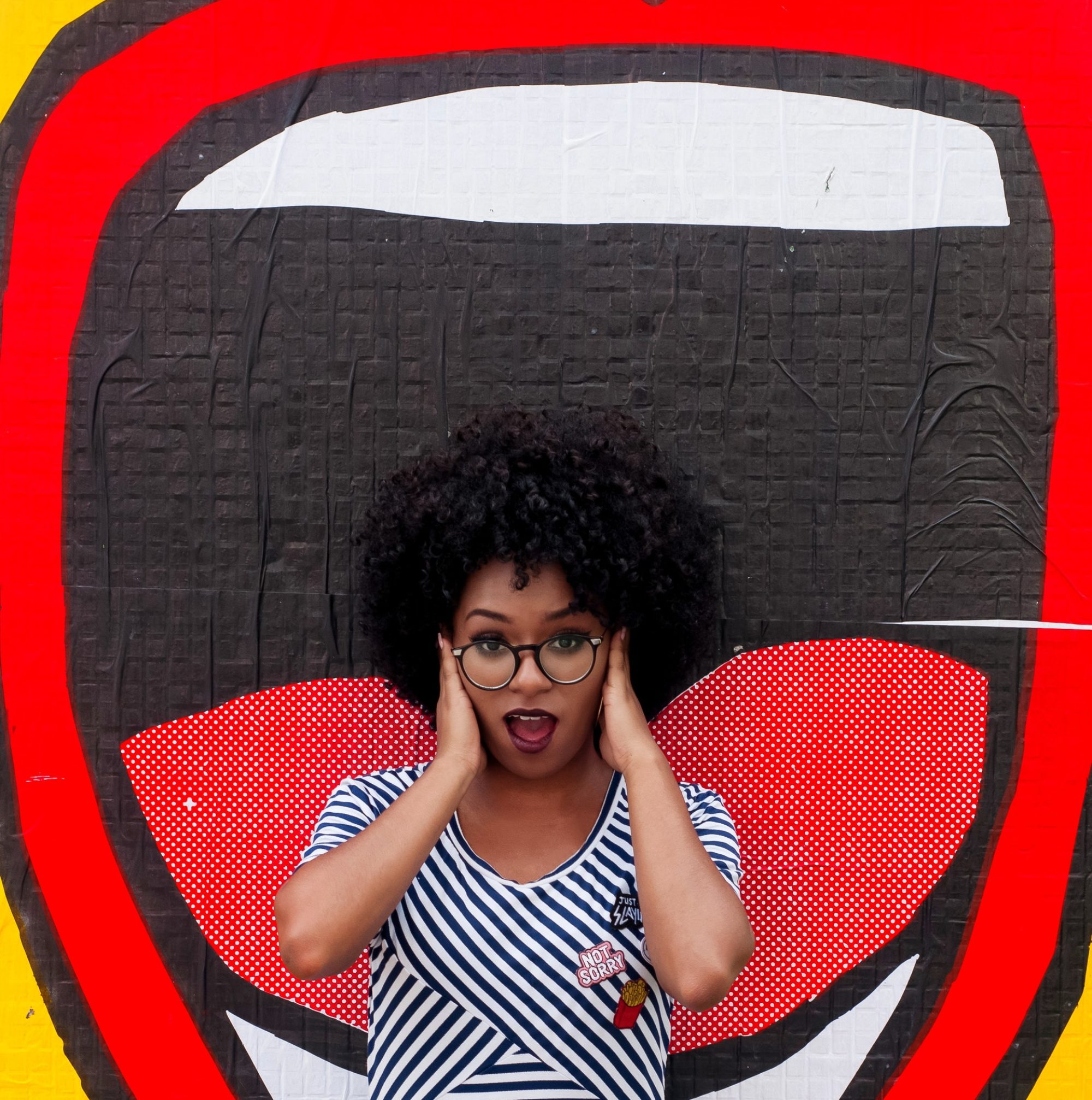
How Many Books & Blogs & Zines & Readings Are Too Many?

Why are we making more books, blogs, zines, essays, paper and digital clutter that we expect readers to muddle through? Aren’t there already enough? In one old, outdated, long-gone advice to writers – who were implored to find a respectable agent (not a dig; many agents are simply amazing and overloaded, stuck in a system not of their own design) and pitch for a place on best-seller tables in huge, chain bookstores – the author advised walking into such a bookstore and answering the presumed-inherent despair of finding so many competitors already displayed on the shelves. Look at all of those books already getting lost in the shuffle. Do you have a story that could, already, in its most recent draft form, blow these all out of the water? No? Then just reassess your entire life and probably admit that you should retire your artistry, burn your own query letter, and go away.

And, statistically, none of us can compete on the Best Seller lists. Statistically, non of us have ever been president. Statistically, nobody’s ever been to the moon. Literally landing on the moon, becoming president, or creating a best seller aren’t the point. Expressing expressing ourselves is. Telling our truths is. It is the point to stop considering ourselves less-than. Stop using measures of arbitrary yet perfunctory and wildly intense standards for art, experiences, and value. What if it’s not even about self-expression and holding a place in the chaos for our own sentiments, but about connecting to others?

What if everybody made and carried a book, blog, zine, essay, photo gallery, painting, clay pot, bronze sculpture, wooden ship, or clear bag full of that week’s recycling, visible to all as a footprint, explanation, extension of the faces we wear. More than an outfit plucked out of the pile for some other function, judged on more factors than that.

It would be amazing. “Hello, nice to meet you. Here is my zine. May I look at your construction?” (Is this an introvert’s quiet, less-verbal dream come true or probing nightmare?) “Yes, I do see you; I see these pieces of you; I am learning about you; I know all of us better now.”

No more immediate, “What do you do?” about less expressive means of paying rent and revealing culture. Fewer immediate insults about gender, skin color, birth place, accent, mobility devices, required physical form in the same space. More, “Yes, you are art; I knew it! I actively notice the trust with which we coexist. Your perspective is real. I have made mistakes, too. Thank you for your ideas. This is the place for you in my hands, eyeballs, and heart.”

Connect. We could all connect, explore, question each other’s creations tenderly, curiously, invited. Full ranges of our moments in time, traded, spread around, not hidden. Not berated to land on one table, with one glossy sign, in a sea of failures. None of these are failures, each taken in turn. As many as we can.

High Contrast Authors

Whenever we raise our voices as survivors of many human conditions, we declare that we are both vulnerable and assertive, and this is may be why we are often considered outlandish, dramatic, hyper-creative, or broadcasting abrasively. The simple existence of artists who are willing to submit both competence, confidence, and adamance, alongside articulation, acknowledgment, or acceptance of all the various kinds of human trauma, are seen sometimes as courageous and strong, but too frequently as broken and shouting, damaged past social norms, or just plain crazy. How dare we live and create with bravado in a world where most humans expect other humans to only reveal their strengths and successes? Bury the factors that have made us so capable. Deny in bios what we fear to even fictionalize or capture in poetry or paintings.

Writers, illustrators, artists, academics, and professionals of all kinds are expected to check the yucky, messy, injured portions of being human at the door of work, school, polite gatherings, and publication. It almost never works, even when we agree. The omnipresent struggle of humanity doesn’t then just disappear. We have all seen the many famous quotes about each of our species containing raging battles on the inside, that are not revealed in each and every moment of every interaction we have. We carry our own raw, tender places within each of us, suspecting that all others nurse these as well. Each next time a human grimaces, gives pause, or has a tight smile when they report to us that that they are, “Ok, you?” we gnaw over whether or not we should pry deeper to check it out, if we could handle the nuances of their truth that day, that moment. We know that everyone, in all aspects of our lives, have had triumphs, heartbreaks, and mediocre muddles of full of subtlety. Why can we just let both be, all of the time? Why doesn’t our greeting of each other in every space simply nod to a current balancing point between tentative oblivion and solid bliss? We know we all have both.

Here, we want to acknowledge that everyone is this see-saw, teeter-totter, inherited and created blend of primate existence. We are allowed to sit in the elemental, experiential, animal existence of organized syntax and pure, instinctual blazing. We can discuss both. We can write both. We can draw both. We can research both. We can protect both. We are already both.

Those who can balance and share elemental pain and joy through genuine expression, harness them together for mutual exploration, shall inherit the starlight of our span in this universe. And it make for really great reading, by whole, wonderful human beings; for whole, amazing human beings.

Have you fallen this year?

So many different factors can make us “at risk” relative to the other professionals in our lives.

Yes, we’ve all fallen in the past year. On wet tile, loose gravel, slick ice, rickety stairs, under the weather, over the moon, off the charts, in full view, in love, out of luck. And we can’t always get up again. Not right away. Sometimes only write-away. Occasionally more of a stuck-in-the-muck-feeling-it situation. With words and images or grumbling and PT.

Have we ever written:

  • Through physical pain
  • As a solution to existential crisis
  • From a hospital bed
  • In a notebook weighed against food
  • On medication good for pain but not punctuation
  • While getting paid to do another, needed job
  • In the middle of the night
  • With kids splayed out all over you
  • With ghosts splayed out all over you
  • While incarcerated
  • On technology older than yourself
  • In secret
  • By trying to dictate trapped thoughts to another
  • Knowing no one would ever read it
  • Under the heft of addiction
  • With the fridge and shelves bare
  • Weeping
  • Trying not to weep
  • Hurling language that has been hurled at you
  • Without translation or apology
  • Openly begging to be heard?

We all have. That’s why we’re here, hear. How do we know we’re not alone? Because just look at everybody out there doing it, pressing through human life to write, illustrate, use their voices. How do they all know they’re not alone? Because here we are, all, doing it, pressing through human life to write, illustrate, use our voices.

This is SPITtake

SPITtake is the blog of GULPpress.

In this format, perhaps we can raise at least as many questions as we offer answers. We can explore why each strand of ephemera is absolutely essential to the entire web being structurally sound and beautiful. We can uplift ourselves and our neighbors by taking a closer look at each of the myriad ways that narratives, lenses, stories, poems, snip-its, and tomes expand and constrict the world in which we live. The margins of any shape can be drawn to cover as much surface area as the central tendencies. All of the intersections of a dwelling can exist together on the same map. Listening empathetically must be paired with thoughtful, earnest, generous speaking up. Each next pause together is worthy.

How will you use your voice?